Recipient of the 2025 Kenneth D. Gardels Award, Keith Ryden has spent more than two decades helping shape many of OGC’s most widely used standards. In this conversation, he reflects on how collaboration across competitors laid the foundation for today’s interoperable geospatial ecosystem—and why open standards continue to matter.
- Congratulations on the Gardels Award. You’ve been deeply involved with OGC for decades. How did you first get involved, and what kept you engaged in this community for so long?
One of the early OGC projects was to define how spatial data should be stored in a relational database. This was in the mid-90’s and aligned with work we were doing at Esri for spatial data management. The problem the industry was trying to solve was how to use SQL capabilities to efficiently store and query spatial data – and OGC added “in a standard and interoperable way” to that challenge.
The OGC provided a forum where we could bring together different interested parties and work through the problem. Competitors worked together for the common good, and the Simple Feature Specification was the result in 1997. It represented both common agreement and hard concessions – nobody got everything they wanted, but there was a willingness to agree on a basic set of geometry types using the SQL model as the framework to produce a workable standard.
What was so exciting about the Simple Feature Specification was how rapidly it was adopted. The original specification defined implementations for SQL, OLE/COM, and CORBA. The SQL specification went further, defining schemas for numeric, binary, and abstract geometry data types. Implementations appeared quickly across commercial and open-source systems, and that rapid return on investment kept us engaged. Our work suddenly became accessible to wider audiences, enabling the rapid growth of applications using spatial data that had been locked up in less accessible formats. - You’ve been involved with shaping some of OGC’s most influential standards, from Simple Features to GeoPackage to I3S. Which of these do you see as having had the biggest impact, and why?
There are a couple of big technological periods represented in the OGC collection of standards:
* Geometry storage and exchange – the Simple Feature Specifications, KML, and GML.
* Early web-based XML schemas – the WxS specifications which enabled interoperable spatial web applications.
* Spatial REST specifications – the OGC API work that is modernizing distributed data access and web application development.
Each of those periods produced OGC Standards that resulted in significant advances in interoperable spatial data access and application development. OGC and the industry would not be where we’re at today without all three of those efforts.
All those efforts ultimately build on the Simple Feature Specification for their core geometry and query model, including the GeoPackage, which is a direct encoding of the Simple Feature Specification. Simple Features are at the core of much of what we build, and that model has held up remarkably well for the past 25 years. - You’ve also played a leading role in advancing Coordinate Reference Systems (CRS). For those less familiar, why do CRS standards matter, and how have they changed the way geospatial data is used?
Coordinate Reference Systems provide the locational and temporal framework on which our geometric features exist. They define the horizontal, vertical, and temporal space that allows applications to interoperate. Without a well-defined CRS, features won’t be positioned properly in space and time – buildings might appear suspended above the ground or partially buried beneath it.
What’s interesting to me about CRS is the breadth of the domain and the potential for data corruption. Spatial data user knowledge of CRS ranges from “What’s that?”, to “It’s web Mercator”, to very detailed understanding about reference frames, datums, and collection methods. As our ability to measure and collect information has improved, our need to capture and persist that information and model the changes has also increased.
Collecting information about the processing and history of spatial data has always been difficult. We have no shortage of metadata standards, but getting people to collect the information and associate it with a data set continues to be difficult. We’ll likely see this problem show up more often as spatial data mixes high and low-precision sources in the future. - OGC prides itself on collaboration and openness. What has working in this collaborative environment meant to you, and how has it shaped the way your work has reached beyond the technical community?
Working with people of different backgrounds with different practical experiences has been one of the most rewarding parts of OGC engagements. Our CRS work, for instance, expanded to include domain experts from National Geodetic Surveys, helping us understand the state of the art and practices in different organizations. The OGC process allowed us to involve these experts even if they weren’t formal members. That openness gave us a broader base of experience to draw on, even if we couldn’t always reach universal consensus.
Access to domain experts and representatives from various academic and national organizations has created a network of people that we can reach out to for questions or ideas. It’s not uncommon for competitors to work together to solve user issues– it leads to better integration and outcomes.
The relationships built through OGC are a big part of its success. - You’ve helped shape many of the standards that underpin modern geospatial systems. Are there examples in your day-to-day life, maybe in a map, an app, or a service you use, that remind you of the impact of this work?
What’s so amazing about the last 30-40 years is how spatial data has become part of almost everything we do. This is due to many factors, particularly the explosion of computing capability and the integration of mobile devices and internet access.
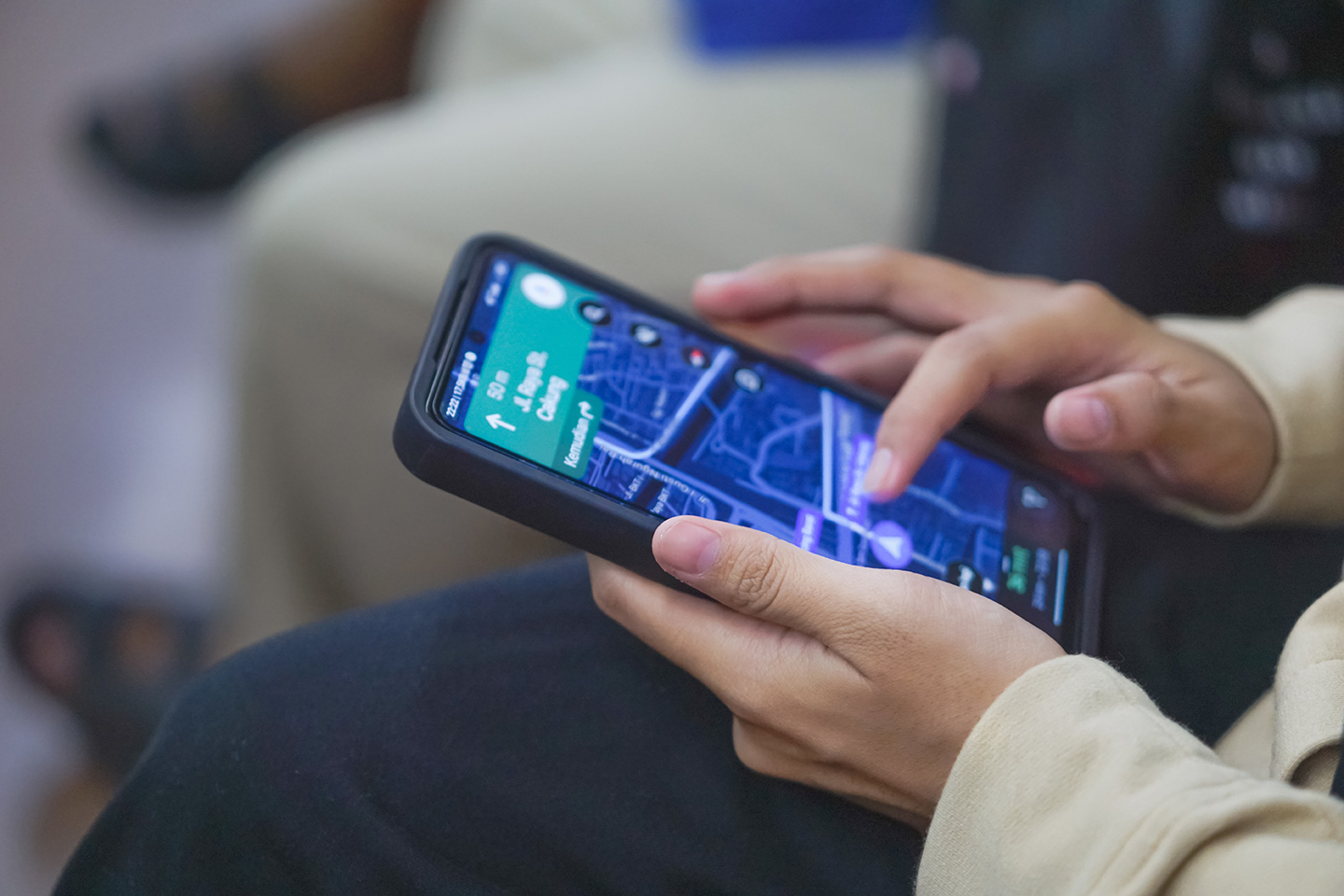
I see it every day – in the maps and apps we all rely on. Whether I am checking how to get from point A to point B, finding a place of interest, seeing where traffic is heavy, or overlaying a storm track on a planned trip, spatial data quietly enables it all. Even something simple like dropping a GPS waypoint or using demographics to plan a business involves geospatial standards at work behind the scenes.
The OGC Standards play a role in making the storage and retrieval of spatial data interoperable and in providing the web services interfaces to make application development easier. There’s a “where” component in almost everything we do – it’s not always a map, sometimes it’s just time to destination, but spatial data is always there. - Esri recently shared a post honoring Dr. Jane Goodall and her lifelong commitment to conservation. This one’s more out of my own curiosity, but it might be interesting to ask how advances in geospatial technology and open standards help conservationists like her better understand and protect the planet.
Dr. Jane Goodall was a tireless advocate for science, conservation, and education – she will be missed. We can all learn from her success in bringing spatial science and tools to local communities, enabling them to restore and manage the environment in a sustainable way.
Her work grew out of the Lake Tanganyika Catchment Reforestation and Education (TACARE) program, which focused on local ownership of development and environmental management. By providing local groups with the tools to help understand their environment and conservation goals, communities could take on ownership of their surroundings and work towards sustainability.
OGC Standards are an integral part of many of the tools used to help these communities understand conservation challenges, educate local people, and track progress. For those interested in learning more about her work, Esri has shared a few excellent resources:
Video: How Jane Goodall Uses Maps to Advance Conservation Goals
How a Global Conservation Movement Started with a Map
The work Dr. Goodall’s team began with TACARE can be replicated worldwide through local advocates and interoperable tools, including citizen-science programs.
As OGC members, we can help advance these conservation methods in our own communities through outreach to schools, libraries, and service organizations. Our time, experience, and access to spatial technology can help prepare the next generation of conservation activists to make a difference in the world. - Looking ahead, where do you see the biggest opportunities or challenges for geospatial standards, and what excites you most about the future?
The OGC API work is a huge step forward from earlier XML web standards. As long as these standards stay simple and efficient, we’ll see strong uptake along with improvements in scalability and performance.
The challenge will be to encourage people to move off older systems once newer ones are proven. With limited budgets, many organizations are reluctant to change something that’s working. OGC and software suppliers will need to clearly communicate the benefits while supporting the transition over time. - Finally, receiving the Gardels Award is significant recognition from your peers. What does it mean to you personally, and how do you hope your work with OGC will continue to influence the community in the years to come?
There is a long line of Gardels Award recipients who have helped me grow over the years – people who spent time helping me and others understand what a standard needs to be for it to be useful and survive over time. They brought different viewpoints to the table and invested the energy to guide us toward common ground – perhaps achieving a subset of what we first set out to accomplish but always reaching something we could agree on.
Many were willing to set competition aside and work for the common good of customers, figuring out where problems existed and how best to resolve them. Others took the time to explain how the process works and how to prepare for interactions with other standards bodies.
My hope is to contribute in small ways that make a difference for others, just as others have helped me.